Wednesday, 4 January 2017

The Inside Man


The Inside Man Dir. Spike Lee

This film is a 2006 American crime thriller. It was directed by Spike Lee and was produced by Imagine Entertainment, Film works and was distributed by Universal Pictures. The films budget was $45 million, but the box office was $184.4 million.


The scene opens with the credits of Universal Pictures and the company Imagine entertainment. Just over 30 seconds into the film, we see a white man saying “My name is Dalton Russell” introducing himself to the audience. This was a direct approach to the audience called breaking the 4th wall, it makes the audience feel more involved and intrigued to see what he’s going to do or say next by drawing them in more. He also says “pay attention to my words”, which again shows the audience that the he is talking directly to the audience. Performance is shown as Dalton uses his dialogue to indulge his audience,within minutes. The use of the phrase “I don’t repeat myself” could connote that he is a straight to the the point type of person.

Mis en scene is used to show that behind Dalton it's pitch black with a bright light focused on him, making it look like he is in an interrogation room or is under the spotlight in a play so all the attention is on him, however it could suggest that he is in prison connoting that he is a criminal, showing a sort of threat and his motive behind the storyline. This scene was shown through a close up shot of Dalton, focusing on his emotionless expression, showing us the time of character he is to this film.


Inglorious Basterds Analysis


Inglorious Basterds Dir. Quentin Tarantino

Inglorious Basterds is a 2009 American-German war film written and directed by Quentin Tarantino starring Brad PittChristoph Waltz and Mélanie Laurent. The film tells the fictional alternate history story of two plots to assassinate Nazi Germany's political leadership. Tarantino wrote the script in 1998 but struggled with the ending and chose to hold off filming and instead direct the two-part film Kill BillA co-production of the United States and Germany, the film began filming in October 2008 and was filmed in Germany and France with a $70 million production budgetInglorious Basterds premiered on May 20, 2009 at the 62nd Cannes Film Festival. It was widely released in theatres in the United States and Europe in August 2009 by The Weinstein Company and Universal Pictures.

Mise-en-scene: The outfits and scenery blended the performances and the music very well. For example the American olive coloured uniforms to show us what side they were on nearly immediately, as well as the black uniforms of the Nazi and the various close ups of medals and the Nazi Swastika. It gives us plenty of information with just a few seconds without wasting time with dialogue. The lighting of the cinema was also very sinister and dark during the end when the Nazi's were trapped in the burning building. This has connotations of the dark minded people meeting a dark, grave ending fitting for the crimes that they have committed against people.

The film opens with the title, directors and company production credits. It then says ‘chapter 1, once upon a time in Nazi occupied France’, this shows that the film is going to be based on or around the Nazis. From the word ‘Nazi’ this suggests that it is most likely a war like film involving the holocaust and someone's perspective of what happened in World War 2. The scene opens up with a wide shot view of a house based on a farm with cows, a green field and a man chopping down a tree. The scene then presents a woman hanging washing, then noticing a vehicle coming her way from afar. Performance is used by the woman showcasing her fear when she notices the vehicles coming and also by communicating with the man shown to the audience first saw at the beginning. The use of a close up shot of their face shows what they feel, which could be fear and nervousness.

Thursday, 15 December 2016

He got game Analysis


He got game (1998) Dir. Spike Lee

He got game is an American Sports drama directed by Spike Lee. The production companies for the film are Spike's own company that he set up called 40 acres and a mule Filmworks, the other production company was Touchstone pictures. There are several themes that run throughout the film that include love, family, hatred, unrequited love and sports.

The film is based around Jake Shuttlesworth and his son Jesus Shuttlesworth. Jake is in prison for murdering his wife, and for that his son hates him and doesn't look at him as a father anymore. Spike uses Basketball in the film as a bonding tool as Jake used to help teach his son when he was younger. Jake uses this as a way to work himself back into his sons life and help make a decision about what college he wants to go to and to try and make up for the years they lost and for what happened between him and Jesus' mum Martha. We see that Basketball is going to be a key element of the film from the first few opening scenes, we see clips of people basketball on courts in neighbourhoods, we then see Jake in prison on a court with another inmate taking shots. Towards the end of the film, we see a flashback of Jake teaching Jesus and 'helping' him to get better at the game. In this scene we start to see another reason as to why Jesus doesn't particularly like him.

Wednesday, 14 December 2016

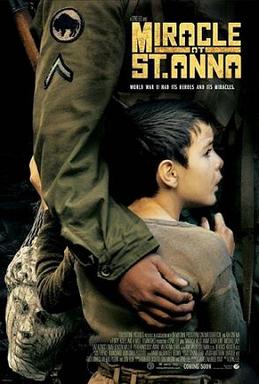
Miracle at St.Anna Analysis


Miracle at St. Anna Dir. Spike Lee (2008)

Miracle at St. Anna is an American-Italian war film, the genre of the film is historical fiction. Several themes ran throughout the film which include Religion, Family, Betrayal, Unrequited love, war and Friendship. The film was filmed and made in 2008 and was directed by Spike Lee and was written by James McBride. The films locations include America, Italy and Port Nassau in the Bahamas. The production companies for the film were Spike Lee's own production company 40 Acres and a Mule film works, Touchstone pictures and RAI Cinema, while Walt Disney Studios and Motion pictures distributed the film. The films budget was $45 million, at the box office the film only grossed $9.3 million and made $10.1 million from DVD sales, which totalled $19.4 million overall.

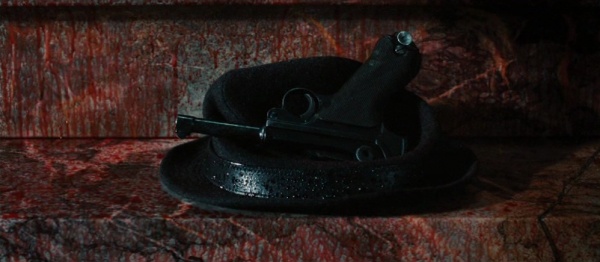
The film features a circular narrative that leads us to the end of the film and connects the story together. The use of the flashbacks in the movie helps us to understand how the characters got to the place they were, it is used as a backstory to each of the characters so we can get to know what they have been through and get an idea of who they are. The film starts with a black man working in a booth at a post office, we see him serve a customer then another customer approaches his booth and asks for a 20 cent stamp. Then after a staring at him a couple of times, the man shoots the customer and closes the booth. The next scene we see is of the gun resting on a hat with a pool of blood around them, this is the scene we see at the end of the film to show to the audience why it happened and the events leading up to it.

The use of a hand-held camera in the battle scenes helps makes the audience feel more involved in the film and makes them feel like they are there with the characters. The hand-held camera is used to emphasise the chaos within the scene, all the gunfire and explosions, the soldiers screaming and shouting in pain at being shot or having limbs blown off. The close-ups of the characters helps to show the pain and anguish they are enduring in the battle and shows their body language towards the events that are happening. We see the effect that the war can have on soldiers at 00:16:23, when one of the soldiers in the Army Platoon starts to become scared and nervous praying for his mum to come and help him. The close-ups and mid-shots of the soldier when he is going through this situation shows his body language and his emotions. Spike uses these shots to shows how scared and petrified soldiers could be when it came to war and when you were called upon to go out to find and fight the enemy army. Not only does it help show emotion and body language, it helps us to sympathise with the characters and almost feel what they are going through.

Racism was a key theme shown in the film by Spike. He showed how the whites used their colour as a position of power and use it to show their superiority above the blacks. A scene where this was indicated was when the soldiers wanted to eat in a café which was occupied by other white Americans and the owner treated the blacks in a patronising and derogatory way by telling them to sit out the back like dogs away from the whites. Close up shots of the all the soldiers face showed their emotions of how they was upset and violated at the fact four white German guys got to sit in a booth despite the fact they are the people they are at war with, and despite the fact they are serving in the Army helping the country, they still get no respect from anyone. However, they repeat their action a while; they went back to the café with an aggressive and violent approach towards the owner and the other white people in there, the owner was intimidated and scared because they were all brandishing weapons.

Sunday, 27 November 2016

The Selfish Giant Film Analysis


The Selfish Giant Dir. Clio Barnard (2013)

The Selfish Giant was directed by Clio Barnard, it was produced by the British Film Institute, Film 4 and Moonspun Films. It was filmed in Bradford, England.

Clio Barnard is a British director of documentary and feature films. She won widespread critical acclaim and multiple awards for her debut, The Arbor, an experimental documentary about Bradford playwright Andrea Dunbar. In 2013 she was hailed as a significant new voice in British cinema for her film The Selfish Giant, which premiered in the Director's Fortnight section of the Cannes film festival.

Her debut feature, The Arbor (2010) won several awards including Best New Documentary Filmmaker at Tribeca Film Festival New York, Best Newcomer and Sutherland Awards at The London Film Festival, Douglas Hickox Award at British Independent Film Awards, The Guardian First Film Award, Best Screenplay at the London Evening Standard Film Awards, the Sheffield Documentary Film Festival Innovation Award and the Jean Vigo Award for Best Direction at Punto de Vista International Documentary Film Festival. She was nominated for the BAFTA Outstanding Debut Award in February 2011.

The film has a cyclic narrative to it as it ends in a similar way to how it starts. The film starts with Arbor under a bed, shouting, screaming and hitting the underside of the bed, until Swifty gets down and give Arbor his hand and they grab hands and it calms Arbor down and almost reassures him leading him to come out from under the bed.. The film comes to an end with the audience seeing Arbor laying under the bed refusing to come out from under the bed,he then imagines seeing Swifty get off the bed and reach his hand out again to reassure him and let him know everything will be alright, then Swifty's mum comes into the room with Arbor's mum and Arbor jumps out from under the bed and gives her a long hug to share her grief and almost give her a hug as an apology for what happened. 
The cyclic structure of the film could also connote what its like to live in poverty, its a never ending cycle that you cannot break, once you having been taking in you cannot leave it.

The film shows poverty in the UK and especially what it is like from a child's perspective. There are many power stations, chimneys and pile-ons shown throughout the film which foreshadows what will happen at the end of the movie. The ‘selfish giants’are the pile-ons and power stations as they took away Arbour’s ticket out from poverty. Swifty had a trait, that allowed him to get on with horses so he could help train and race them. This could have provided Swifty and Arbour with lots of money had the horses of won and they could of eventually taken their families out of poverty ridden Bradford so they could start a new life somewhere else. The adults are also the selfish giants in the film, for example Kitten, the scrapyard owner was selfish because he was getting Arbor ans Swifty to go and steal and salvage scrap metal to make him money. The parents are selfish giants in a way because if we take Swifty's dad for example, he was verbally abusive and took away from the family even though he done it to try and provide for them.

Barnard places a metaphor in the film that runs throughout the film that becomes more noticeable throughout the film that emulates the world that the protagonists live in. The copper wiring is used to represent Arbor and Swifty while the casing around the wiring represents the world of poverty that they have been brought up in. The wiring being taken out of the casing represents Arbor and Swifty staking their claim in a world without poverty,but the casing representing the poverty of the world they live in soon becomes the catalyst that changes their lives forever and prevents them from making it out of poverty.


Jonah Film Analysis


Jonah Dir. Kibwe Tavares (2013)

Jonah is a social-realism film and was directed by Kibwe Tavares. Filmed in Zanzibar and Tanzania, and was funded by the BFI Film Fund and was produced by Film 4, Shine Pictures and Stray Bear Productions,  as well as special effects company Jellyfish Pictures.

Kibwe Tavares was a student at Bartlett School of Architecture, his graduation film, ‘Robots of Brixton’, won the Special Jury Prize at the Sundance Film Festival.  Other awards include a TED fellowship and recognition as one of Fast Company’s ‘100 Most Creative People in Business’. Kibwe combines his training as an architect with storytelling and animation to create futuristic 3D live action/animated films that are incredibly detailed and vivid. He was named one of the top twenty young global Directors at the Saatchi & Saatchi New Director’s showcase; won Best Short Film Award for ‘Jonah’ at the CFPE/Shots Young Director’s Award plus the Special Jury Prize and he also walked away with the Audience Award. 

Jonah is set in a built up village in Zanzibar. We see it is built up within the first few scenes as there are lots of people in alleys and side roads, even the main road has several little shops on the side for people to stop at and there are several pickup trucks that go past with people sitting in the back. From some of the opening scenes we see that there could be a lot of poverty in the area,

In this picture from the film, we can see tin roofs that are rusting and the pavement looks dirty, this connotes that the area in which the film is set are going through hard times.

We also see connotations of the village not being of a high class standard when the two protagonists Mbwana and Juma are on the beach talking, and Mbwana talks about building a Buckingham palace on the beach and an Eiffel tower to make it look better. However, despite this being said, the village that they are living is already a fairly idealistic place to live as it is by a beach which most people would like.


We see Mbwana's idealistic version of the village appear when he starts to gain fame after Juma takes a picture of him with a giant fish jumping out of the water behind him. Once Mbwana gains this fame, his life turns from him stealing from people to being the talk of the town, everybody in his town knows who he is and  he starts to get his idealistic life. The use of Tavares' animations of the billboards being erected around the town and being taken down at the end of the film has connotations of what fame can do to you. The billboards quick erection and fall shows that Mbwana's idealistic life wouldn't work and would ruin the village just like the added tourism from the fish done to the village.

The use of the camera shots in the film ranges from close ups and long shots with a plethora of other shots and angles in between. 

This mid shot of Juma and Mbwana shows both of their facial expressions and their body language when talking about building Buckingham Palace. We can see Juma (on the left), looks confused about the idea and looks like he wants to take a step away from Mbwana because he doesn't want to be apart of the plans because he knows what it will do to their home. Mbwana however, is relishing the idea and thinks it could turn their home into a better place and will turn everything around, making the village better. 
The use of close ups in this film gives us a little bit of an insight into what the characters could be thinking as well as their feeling and reactions to events that take place. For example in this picture, we see Mbwana with a big grin on his face after seeing the picture Juma took of him with the fish behind him. The look on Mbwana's face can suggest that he can finally follow through on the idea of making the village a tourist attraction and trying to turn around their way of life.